Posts

Showing posts with the label health

Run fuelling: A holistic approach
Image
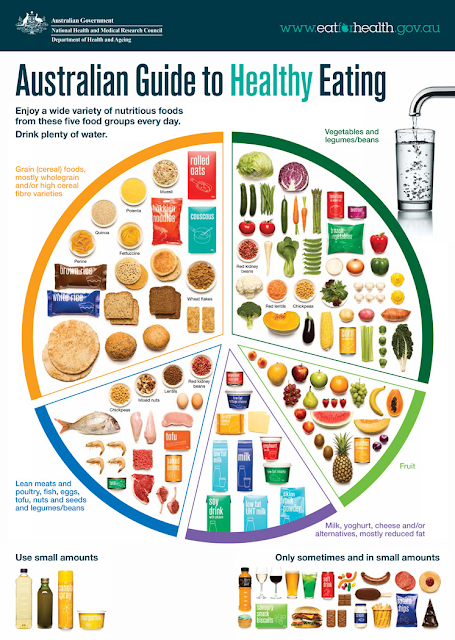
Dr Breanne Kunstler (BBiomedSci, BHealthSci, MPhysio, PhD). Physiotherapist, behaviour change scientist and run coach. There are people who insist on eating before a run to feel energised and prevent the dreaded mid-run "bonk" (no, not that kind of bonk...) and those who absolutely refuse to eat to avoid tummy upsets and hope for the best. Both of these runners will use stored carbohydrate, which comes from food consumed in meals consumed in the hours and days before the run. Regardless of whether you eat before a run or not, your run is going to use carbohydrate/carbs (sugars) to fuel your muscles. Therefore, getting the most out of your running depends on the food you consume, and don't consume, at times when you aren't running too. Those who make sure they get sufficient carbohydrate in their diet throughout the days leading up to their run will likely get more out of their running. Eating to run: How much carbohydrate should I eat each day? There's plenty of e...

Using power to guide your running: Why and how

Image
Dr Breanne Kunstler (BBiomedSci, BHealthSci, MPhysio, PhD). Physiotherapist, behaviour change scientist and run coach. What is “running power”? Let’s start with an analogy:  You are walking in the park and feel water beginning to drop lightly on your shoulders. That’s OK, a little rain never hurt anyone and it’s certainly not going to stop you going for a walk in your favourite park on such a beautiful, sunny day. Wait…sunny? Yes, it’s a warm, sunny day. The temperature and the absence of clouds in the sky, together with your choice of summer outfit and knowledge that today is meant to be sunny, conflict with the feeling of raindrops on your shoulders. Ah, it rained last night! Those drops must just be left over rain falling from the leaves of the trees above you. The above example shows that, when coming to a conclusion, we can use one piece of information (feeling of rain drops = raining) or many pieces of information (sunny and warm day ≠ raining). Often, the more informa...

Pear and spice and everything nice: Brea's Christmas pies!

Image
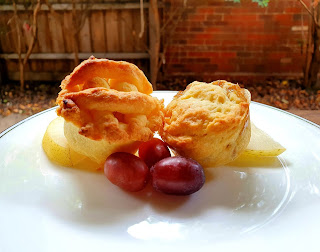
Get festive with these cute and tasty little pies. They are so easy and quick to make. Just make sure you prepare the pastry at least one hour before you plan to bake. This recipe will make approximately 16 pies. Ingredients Pastry 315g (2.5 cups) plain flour 1 tspn. salt 1 tbsp. white sugar  230g unsalted COLD butter (cubed) 0.25-0.5 cups of cold water  Filling 2.5 cups of pear chopped into small cubes ( you can use apple if you prefer ) 1/4 cup white or caster sugar 2 tbsp. plain flour 1 tspn. vanilla extract 1/2-1 tbsp. mixed spice (depending on taste) You can add some raisins/dried fruit to add more Christmas if you like! Method Pastry 1. Mix flour, sugar and salt together in a large bowl. 2. Add butter to flour mix. 3. Use a knife to "cut" the butter through the flour until it is combined into a crumb-like consistency. Don't use your hands as this will heat up the butter too much. 4. Slowly add the water as you continue to mix the dough until it comes together. 5. Wr...

Brea's pumpkin and zucchini bread

Image
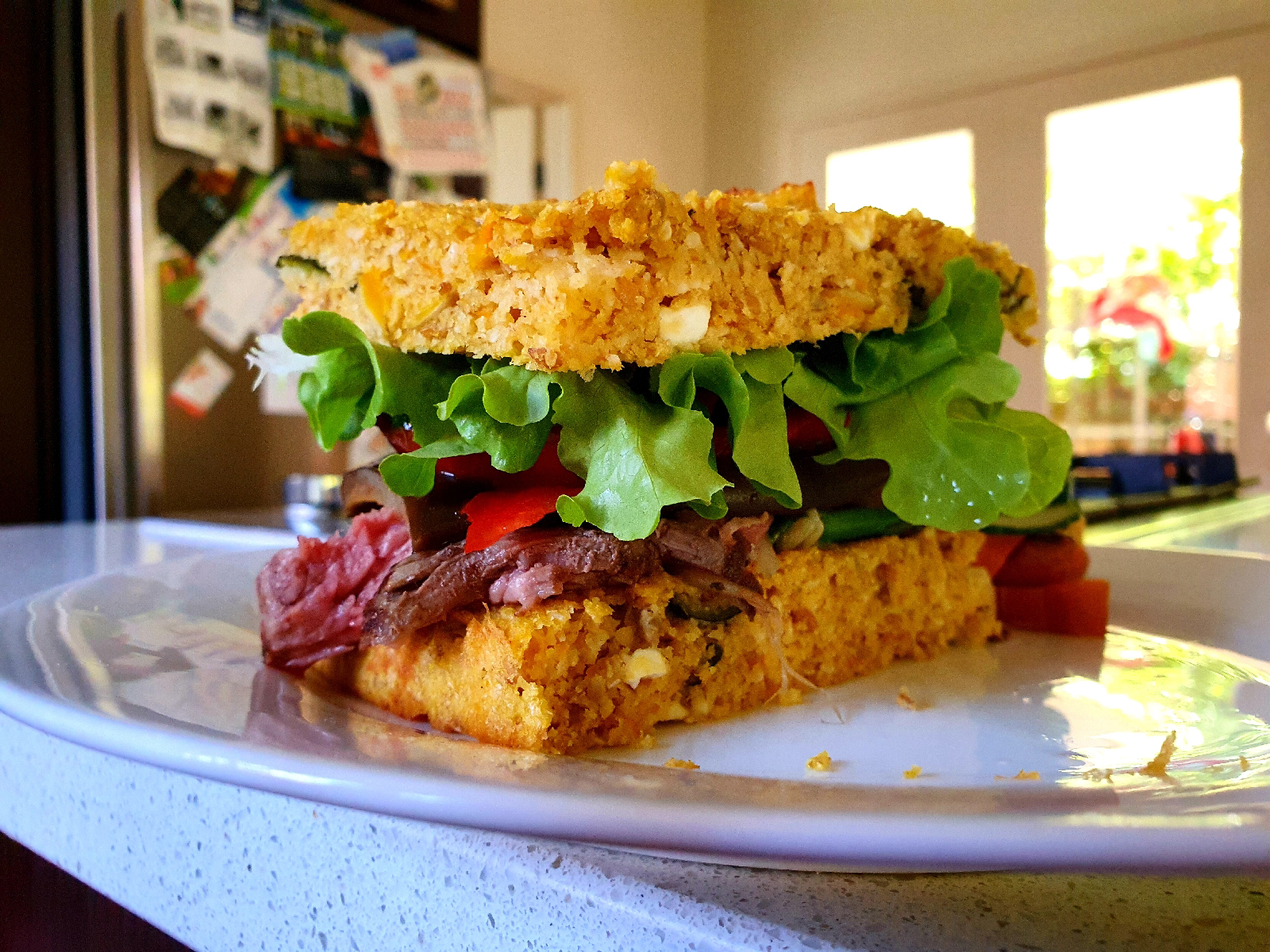
Try this pumpkin and zucchini bread next time you want to add a little more excitement (and nutrition!) to your sandwich. This recipe makes enough bread for two sandwiches. Ingredients 100g cooked and mashed pumpkin*  Half a medium zucchini (grated) 100g cottage cheese 1 egg 100ml milk 125g self raising flour * 1/4 teaspoon bicarb soda 2 tablespoons of seeds for crunch (I use sesame, sunflower and linseeds but use what you like) 20g crumbled feta cheese (optional) 1 tablespoon parmesan cheese* Method Mix the pumpkin, zucchini, cottage cheese, egg, milk, flour, bicarb, seeds and feta in a bowl. 2. Place mix into a 20cm x 20cm baking dish and sprinkle parmesan cheese over the top. 3. Bake at 160deg fan forced for 15-20min (times will vary depending on your oven). 4. Cut into quarters and serve with your favourite fillings. *Notes Keep the skin on your vegetables for added fibre. I use 1/4 cup tapioca flour, 1/4 cup polenta (cornmeal), 1/4 cup semolina and 1/4 teaspoon bic...

Masking the real problem: Does wearing a face mask during running make it feel harder or are you just unfit?

Image
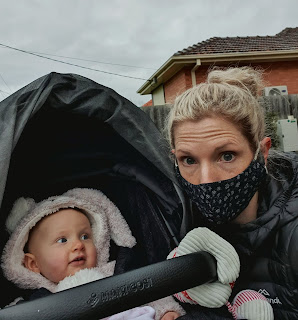
Dr Breanne Kunstler (BBiomedSci, BHealthSci, MPhysio, PhD).  Physiotherapist, behaviour change scientist and run coach. Aim: Establish the effects of wearing a facial mask on perceived exertion and physiological outcomes during running. Method: One 31-year-old woman (max HR = 189 beats per min) pushing a pram with one 10 month-old-child (weight = heavy) ran* 2.7km twice while attending a work meeting. The second run was completed while wearing a three-layered facial mask. The space between each run involved getting the grocery shopping done, allowing heart rate and perceived exertion to reach normal levels. One Garmin Forerunner™ watch measured physiological outcomes (heart rate [HR] and percentage heart rate maximum [%HRMax]). Distance, time to complete and pace was also recorded using the watch. Rating of perceived exertion was measured on a scale of 0 (as easy as sleeping) to 10 (exhausting). Results: The two runs were successfully completed with baby and pram in situ, as we...

Survival of the fittest: The health of the nation post-COVID19 could be bleak

Image
Dr Breanne Kunstler (BBiomedSci, BHealthSci, MPhysio, PhD).  Physiotherapist, behaviour change scientist and run coach. My last post involved talking about the potential positives of being isolated during the COVID-19 pandemic. Now it's time to talk about some of the negatives. But, I'm not going to talk about the immediate negatives like poor health and economic outcomes . Instead, I'm going to focus specifically on the future negatives. What could go wrong when we encourage the entire Australian population to stay indoors? Image 1: Will you look circle-like after self-isolation? (credit: Bored Panda ) For those who don't know, I am a researcher and do a lot of work in changing health behaviours (e.g. supporting people to exercise more). So this pandemic has made me not only fear for our current health, but also our future health as a result of the lifestyle changes we'll make as we transition to increasing the amount of time spent indoors trying to dodg...

What does a physio telehealth (video) consultation involve?

Dr Breanne Kunstler (BBiomedSci, BHealthSci, MPhysio, PhD).  Physiotherapist, behaviour change scientist and run coach. Those who have seen a physio before are probably used to going to a clinic, checking in with the receptionist, waiting in the waiting room and then seeing the physio in their consultation room. The COVID-19 pandemic has thrown a spanner in the works. The clinic is your computer room, your receptionist is the 'accept' button on a calendar invite, your waiting room has a comfy couch and your trusty dog and your physio's consulting room is in the cloud. This is 2020. This is pandemic physio. This is telehealth! So what does a telehealth consultation look like? A patient of mine gave me permission to share a video of part of our consultation where I am assessing her shoulder movement and prescribing her an exercise. As you can see, there's not much difference between assessment over telehealth and assessment in person! Except that the consultat...

Overcoming obstacles during COVID19

Dr Breanne Kunstler (BBiomedSci, BHealthSci, MPhysio, PhD).  Physiotherapist, behaviour change scientist and run coach.   Isolation throws many ordinary things at us, like boredom, loneliness and the potential for poor fitness and general health. Let's try and overcome our isolation obstacles with a homemade obstacle course! I created two obstacle courses at home using stuff I have lying around. Yes, there's some exercise equipment, but you don't need it. Check out my videos below.  Are you new to exercise? Check that you're safe to exercise by  completing this online quiz first . Talk to your preferred health care professional (e.g. GP or physio) if you have any concerns about your safety to exercise before undergoing a new activity. Make sure you warm up and cool down appropriately before exercising (e.g. gentle walking around the block) Cardio Obstacle Course This short circuit starts and ends with a gentle cardio exercise, like stepping up...

Isolating ourselves during the COVID-19 pandemic is shit. Are there any positives we can focus on?

Image
Dr Breanne Kunstler (BBiomedSci, BHealthSci, MPhysio, PhD).  Physiotherapist, behaviour change scientist and run coach.     We are in the beginning of the first (and hopefully last) pandemic of our generation. The COVID-19 or "coronavirus" pandemic sees many of us having to undergo several behaviour changes that we never anticipated needing to make.  What is "coronavirus"? Check out this video for an explainer of the virus' action and COVID-19's infection outcomes. We are being asked to do things we never thought we'd need to do in 2020, like avoiding people around us by using  social distancing that includes 1.5m spacing . We have also seen a lot of the things we enjoy being taken away from us, like our  pubs, clubs, restaurants, cafes ,  gardens  and  beaches  being closed. Image 1: Introverts might enjoy the isolation, but those extroverts out there might struggle without their clubs and pubs (credit: knowyourmeme.co...

Keeping well in self isolation: Advice from a physiotherapist on keeping active at home for all ages

Image
Dr Breanne Kunstler (BBiomedSci, BHealthSci, MPhysio, PhD).  Physiotherapist, behaviour change scientist and run coach.   COVID-19 ("Coronavirus") has officially been  declared a pandemic  by the  World Health Organisation (WHO) . Australia has recently taken the extreme and necessary step of asking people to self-isolate if they :  Are experiencing symptoms (e.g. fever, cough, shortness of breath or sore throat [Image 1]); Have been in contact with someone with COVID-19; or Have travelled overseas and arrived back in Australia after March 15. Image 1: Symptoms of COVID-19 (credit: health.gov.au ) Self isolation can be just that: isolating . We often say that we wish we could just stop time for a couple of weeks and take time off from our responsibilities, like work and exercise, and put our feet up. Well, now that it's enforced for many, we start to realise that it's actually not much fun. In fact, breaks from usual activity can be  bad...